
Dark Spots After Summer: How to Treat Hyperpigmentation, Sun Spots and Post-Acne Marks
Saturday 26th September 2026
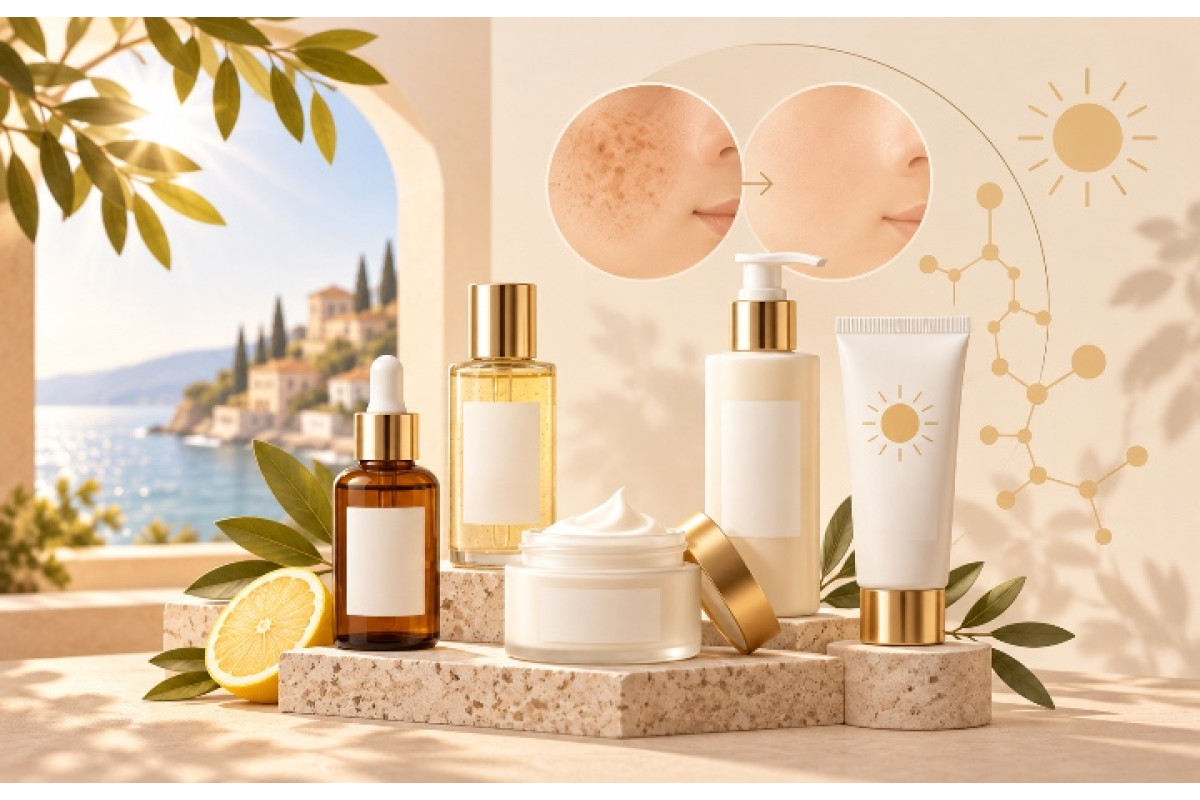
Dark spots often become more noticeable when summer ends. A tan fades, but areas of uneven pigment may remain: small sun spots, marks left after blemishes or broader patches that look darker than the surrounding skin. In many cases, ultraviolet exposure accumulated over the summer has stimulated melanin production, while heat and inflammation can make existing discolouration more visible.
The best autumn strategy is not to attack every mark with the strongest product available. Hyperpigmentation responds better to a consistent routine based on daily photoprotection, a small number of well-chosen active ingredients and good skin-barrier support. The first step is understanding what type of pigmentation you may be dealing with.
Why do dark spots look more obvious after summer?
Ultraviolet radiation activates melanocytes, the cells that produce melanin. After weeks of sun exposure, some areas may retain more pigment than others. Sunlight can also darken marks left by acne or irritation and can trigger or worsen melasma in susceptible people.
Summer can also leave the skin dehydrated or sensitised through heat, sweat, swimming, air conditioning and frequent cleansing. If several exfoliating acids or retinoids are added at once, irritation may follow — and inflammation itself can contribute to post-inflammatory hyperpigmentation. A calm, gradual routine is therefore usually more sensible than an aggressive “brightening” programme.
Not all pigmentation is the same
Sun spots and uneven tone
Small, flat brown areas on frequently exposed parts of the face are often associated with cumulative sun exposure. Brightening ingredients and careful sun protection may gradually improve their appearance, but prevention matters because fresh UV exposure can make them darker again.
Post-inflammatory marks
After acne, shaving irritation or another inflammatory episode, a brown or grey-brown mark may remain after the original problem has settled. The priority is to control the cause of inflammation and avoid picking or excessive exfoliation; targeted brightening care can then be introduced gradually.
Melasma
Melasma usually appears as broader, often symmetrical patches, commonly on the cheeks, forehead or upper lip. Sunlight is an important trigger, while hormones and other factors may also contribute. It can be persistent, so widespread, recurrent or uncertain pigmentation is a good reason to obtain a dermatologist’s diagnosis before starting intensive treatment.
Which active ingredients are useful for dark spots?
| Main concern | Ingredients to consider | Practical use |
|---|---|---|
| Dull, uneven tone | Vitamin C, niacinamide | Often convenient in the morning under moisturiser and SPF |
| Post-acne marks | Azelaic acid, niacinamide, vitamin C | Introduce one active first and monitor tolerance |
| Photoageing with pigmentation | Retinol or other cosmetic retinoids | Use in the evening, beginning gradually |
| Rough texture with superficial discolouration | AHA such as glycolic or lactic acid | Use periodically rather than automatically every night |
Vitamin C: antioxidant support and radiance
Vitamin C combines antioxidant support with a brightening effect. Formulas may use pure ascorbic acid or more stable derivatives, so strength, texture and tolerance vary. It is often used in the morning under moisturiser and sunscreen. For dull skin with mild uneven tone, it can be a simpler starting point than combining several stronger actives.
Azelaic acid and targeted anti-pigmentation formulas
Azelaic acid is particularly interesting when pigmentation follows blemishes or when the skin also tends to redness and imperfections. Dedicated dark-spot formulas may also combine ingredients such as kojic acid, arbutin or mild exfoliating agents. A well-designed formula used consistently is usually more useful than several overlapping brightening products applied together.
Retinol: useful, but introduce it slowly
Retinol and other retinoids can improve the appearance of photoaged skin, uneven texture and pigmentation over time, but they may cause dryness or irritation when introduced too quickly. Follow the manufacturer’s recommended frequency and increase only if the skin remains comfortable. If you are new to retinol, avoid starting a strong exfoliating acid in the same week. During pregnancy, or when trying to conceive, seek medical advice before using retinoid products.
AHA acids: improve texture without over-exfoliating
Glycolic, lactic and other alpha-hydroxy acids help remove excess surface cells and can make the complexion look smoother and brighter. They may be useful when dark spots come with rough texture, but overuse can weaken the barrier and increase irritation. More frequent use is not automatically more effective.
Niacinamide: a useful supporting ingredient
Niacinamide can support the skin barrier and improve the appearance of uneven tone while fitting easily into routines that already contain vitamin C, retinol or acids. For sensitive skin, a niacinamide-containing serum or moisturiser can be a useful supporting step rather than another aggressive treatment.
The most important step: sunscreen every day
No brightening routine works well if fresh light exposure continually stimulates pigmentation. Choose a broad-spectrum sunscreen with at least SPF 30; for people actively managing hyperpigmentation, SPF 50 or 50+ is a practical default. Reapply when spending prolonged time outdoors, especially after sweating or swimming.
For melasma or pigmentation strongly influenced by light, tinted sunscreens containing iron oxides may offer additional protection against visible light. A hat, shade and sensible sun avoidance are also part of the strategy — sunscreen should not be the only protective measure.
A simple autumn routine for pigmentation
Morning
- Gentle cleansing. Avoid an unnecessarily harsh cleanser if the skin already feels tight.
- Brightening or antioxidant serum. Vitamin C or niacinamide are logical choices.
- Moisturiser. Match the texture to your skin type.
- Broad-spectrum sunscreen. Make this the non-negotiable final step.
Evening
- Cleanse thoroughly but gently to remove sunscreen, makeup and daily impurities.
- Use one principal treatment: a targeted anti-dark-spot formula, azelaic-acid-based care, retinol or an exfoliating acid — not necessarily all together.
- Support the barrier with a comfortable moisturiser, particularly when using retinol or acids.
If the skin stings, becomes persistently red, peels excessively or feels increasingly tight, reduce the frequency of active products. A short pause is often more productive than trying to “push through” irritation.
Examples from the Wellness Expert catalogue
Wellness Expert carries several professional and dermocosmetic lines that fit different approaches to uneven pigmentation. You do not need all of them; the aim is to select the product type that fits the rest of your routine.
- ACM Depiwhite offers targeted anti-dark-spot care for a pigmentation-focused step.
- SeSDerma C-VIT focuses on vitamin C and antioxidant care; C-VIT 5 Liposomal Serum is one example for radiance and uneven-looking tone.
- NovExpert Booster with Vitamin C is another vitamin-C-focused option for dull or uneven-looking skin.
- Skeyndor Power C+ includes vitamin C serums, emulsions and concentrates aimed at radiance and a more even-looking complexion.
If you already use retinol at night, a vitamin C serum in the morning may be easier to integrate than another strong evening active. If the skin is sensitive after summer, begin with barrier support and one brightening product rather than a complete multi-active programme.
Five common mistakes that slow progress
- Skipping sunscreen in autumn. UV exposure does not disappear when temperatures fall.
- Adding too many actives at once. Irritation can make uneven pigmentation harder to manage.
- Changing products every week. Pigmentation usually requires consistent care over weeks or months.
- Treating every brown mark as the same problem. Sun spots, post-inflammatory marks and melasma behave differently.
- Scrubbing or “bleaching” the skin aggressively. A stable barrier is part of an effective brightening routine.
How long does it take to see a difference?
There is no universal timetable. Superficial post-inflammatory marks may fade gradually over several months, while deeper pigmentation and melasma can persist much longer. Aim for steady improvement rather than an overnight transformation. A photograph in the same lighting every four weeks is often more useful than judging the skin every morning.
When should you see a dermatologist?
Cosmetic skincare can be appropriate for familiar, mild uneven tone, but not every dark mark is simple hyperpigmentation. Seek professional assessment if a spot is new and changing, has an irregular shape or colour, bleeds, itches persistently or looks clearly different from your other marks. A dermatologist can also diagnose suspected melasma and discuss prescription treatments or procedures when cosmetics are not enough.
Protect, treat and stay consistent
Post-summer pigmentation is a skincare concern where more products do not necessarily mean faster results. Start with daily photoprotection, keep the barrier comfortable and add one targeted active that matches the main concern. Vitamin C and niacinamide are practical for brightness and tone; azelaic-acid-based or dedicated anti-spot formulas may suit post-inflammatory marks; retinol and AHA can be useful when pigmentation comes with photoageing or rough texture.
The most effective routine is the one you can follow consistently without keeping the skin irritated. Autumn is an excellent time to reset the routine and help the skin return to a more even, resilient and healthy-looking state while reducing the triggers that make dark spots return.