
Dry lips in autumn: choosing lip balm, evening care and preparation for lipstick
Saturday 03rd October 2026
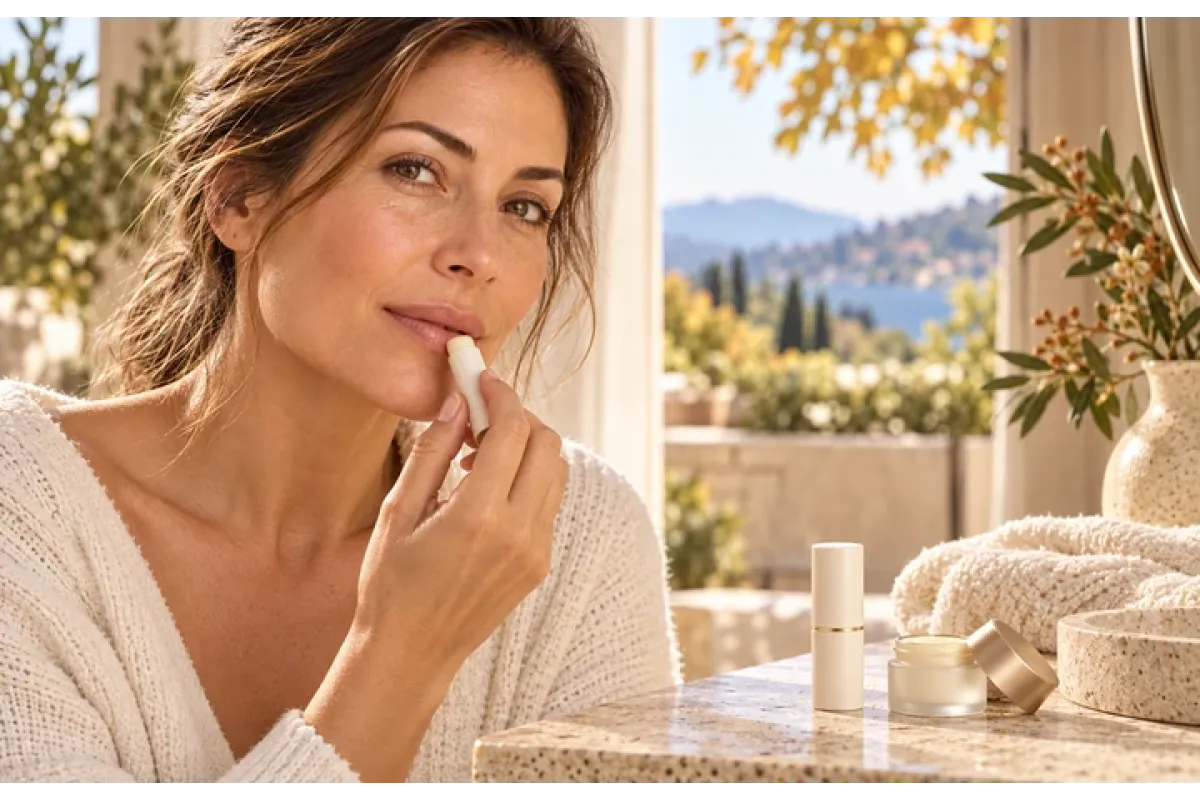
In autumn, you may find yourself reaching for your usual balm more often: lips feel tight after a walk, dry indoors, and uneven beneath lipstick. It is tempting to buy a stick for your bag, an overnight mask and a cream promising extra volume. A more useful starting point is to identify when discomfort occurs and which care you will use regularly. Daytime texture, evening application and makeup preparation can call for different approaches, but they do not necessarily require three separate products.
By Mila Serani, Skincare & Beauty Editor at Wellness Expert
Start with the purpose and application area
Lip balm and lip-contour cream
If the surface of your lips feels dry, look for a product intended for that area. Descriptions such as “eyes and lips” or “lip contour” need a closer look: the cream may be designed for skin around the mouth. Do not automatically apply it to the lips themselves. The product page and packaging should clearly explain where and how to use it.
Then decide your main aim. You might want a comfortable colourless balm that is easy to reapply during the day, a richer texture in the evening, or care that works well beneath lipstick. Smoothing and visible plumping describe additional cosmetic effects. Those promises alone do not tell you how a product will fit your dry-lip routine.
Assess ingredients and how the product feels
Fragrance-free care and comfortable application
Read the full ingredient list, as well as any highlighted ingredient on the front. Oils, waxes and moisturising ingredients can be combined in different textures: two balms containing shea butter need not feel alike. Ingredients help you compare formulas; comfortable application helps you decide whether an individual product suits your everyday habits.
If your lips are sensitive, a fragrance-free formula is a reasonable starting point. You may still react to another ingredient. Do not put up with burning or tingling for a promised result: the American Academy of Dermatology (AAD) advises stopping a product that irritates your lips. Check how well you tolerate a visible-plumping product especially carefully.
It also helps to decide which finish you prefer: barely noticeable, softly glossy or more substantial. Transparency, fragrance and a cooling sensation cannot tell you whether you will enjoy repeated application. If you dislike a product's feel, you are unlikely to use it as regularly as you intended.
A guide to choosing for different situations
| When you need care | What to consider | What to check |
|---|---|---|
| During the day, without makeup | A convenient balm for regular reapplication | Application area, tolerance, colour and finish |
| In the evening, after removing lipstick | Lip balm or cream with a comfortable rich texture | Whether the product can be left on the lips |
| Before lipstick | Lip care suitable for makeup preparation | Amount, excess shine and how much the lipstick slips |
| Before going outdoors | A lip product with stated SPF 30 or higher and UVA/UVB protection | The label and sunscreen reapplication directions |
One product may suit several situations. However, “protective” or “for cold weather” does not establish sun protection. Look for a separate label: the AAD recommends SPF 30+ and broad-spectrum protection for lips. Do not assume a regular balm has SPF because its name promises protection.
Build a daytime and evening routine
During the day, ease of reapplication matters. Keep a compact tube or stick within reach; a pot also works if you prefer that format. Use the amount specified by the manufacturer and reapply according to need and directions. After eating, check whether the product remains on your lips instead of automatically adding layers by the clock.
Do you need a separate overnight mask?
In the evening, gently remove makeup with a suitable product and apply care to clean lips. If your balm is designed to stay on the lips and you like its texture, you may not need an additional overnight mask. Calling a product a “mask” does not make it essential or more appropriate.
If you choose a mask, check that it is intended for lips and can be left on for the required time. A face mask or rinse-off product has its own directions. Do not change these yourself or aim for the thickest possible layer. Even application and a comfortable feel overnight are more useful goals.
Prepare your lips before lipstick
Applying care at the start of your makeup routine gives it time while you work on other steps. The waiting time and amount depend on the formula. If excessive lipstick slip is the main problem, first adjust the amount and preparation method while keeping your lips comfortable.
- Clean lips without vigorous rubbing and apply suitable care as directed.
- Allow it to settle; before lipstick, gently blot only obvious excess with a clean tissue.
- Apply lipstick and assess the combination: wear and finish may vary.
- If you have painful cracks or marked irritation, put makeup aside and focus on gentle care.
Do not try to create a smooth surface by pulling off flakes or scrubbing your lips vigorously. Skip that preparation when lips are irritated. Regular facial acids and other face products should also stay off this area unless their manufacturer specifically permits application there.
Three examples from Wellness Expert
These are options to compare, rather than a compulsory set. Check the purpose and current ingredients against the product page and your own packaging.
- Ainhoa Skin Respect Sensitive 365 Lip and SOS Balm 15ml is a fragrance-free balm for lips and small dry areas. Its page lists plant oils, shea, cocoa and cupuaçu butters, and candelilla wax; it is applied as needed during the day.
- Matis Reponse Delicate Cold-Lip Balm Soothing Balm 8g is a melting balm with beeswax and shea butter for care in cold, windy conditions. The manufacturer lists fragrance in the formula: consider this if your lips react to fragranced products.
- Maria Galland 5L NUTRI’VITAL Velvet Lip Cream 10ml is a dedicated lip cream with wax, plant oils, glycerin and provitamin B5. The manufacturer describes daily care and makeup preparation; follow its directions for the amount.
Choosing between them starts with tolerance and your preferred way of using care. A pot balm, a multipurpose tube and a lip cream can be compared by how they fit your day. Check sun protection separately: no SPF claim is made for these examples here.
Small habits worth reviewing
Removing repeated irritation can be more useful than adding another layer. The NHS advises avoiding lip licking and picking at flaky skin. Wash your hands before applying balm with a finger, keep the packaging clean and do not share it with others.
To judge a new formula, introduce one product at a time and observe comfort. Starting a balm, plumping gloss, new lipstick and night mask together makes the result harder to understand. Keep your care where it is convenient to use, and consider whether a second format is really needed.
When to seek advice
If gentle care brings no improvement in two to three weeks, discuss the dryness with a dermatologist; the AAD gives this timeframe for assessing home care. Seek medical advice sooner for lips that are hot, painful and swollen. Persistent discomfort should not lead to an endless succession of new cosmetic purchases.
Practical lip care begins with a clear purpose, good tolerance and easy application. Choose something you enjoy using during the day or evening, and assess lipstick compatibility and SPF as separate needs. This makes a short, familiar routine easier to build without unnecessary purchases.