
Facial cleansing oil: removing makeup and choosing a second cleanse
Monday 02nd November 2026
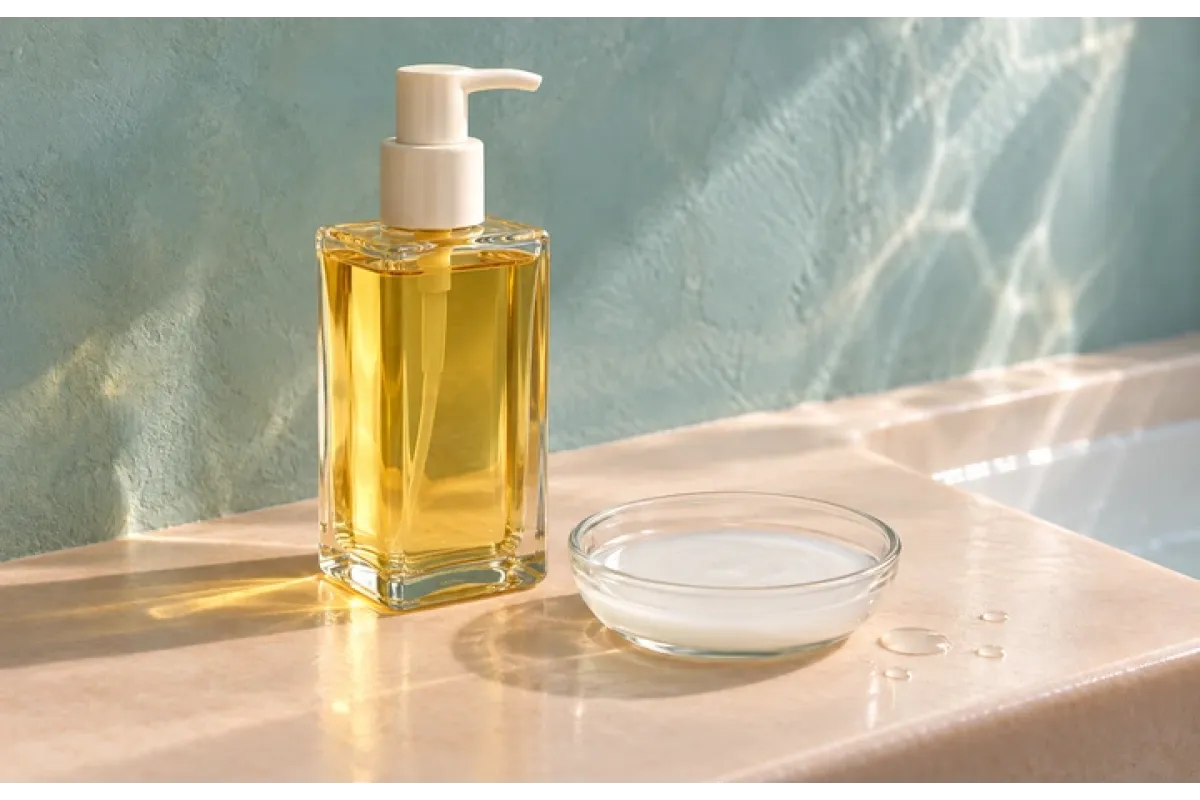
At the end of the day, you want to remove foundation, blush and makeup around the hairline without prolonged rubbing. Cleansing oil sounds convenient, but questions follow: should the face be dry or damp, why add water, and must a gel cleanser come afterwards? The answer depends on the particular formula and what you want to remove.
Choose cleansing oil by its purpose, removal method and the comfort of the complete routine. The word “oil” does not make different bottles interchangeable. Here is how to distinguish makeup removal from skincare and fit the product into your evening without unnecessary complexity.
Cleansing oil and face oil: check the purpose first
Cleansing oil is intended to remove makeup and impurities through the manufacturer’s specified method. A skincare face oil belongs to a different step. Similar textures therefore do not justify transferring the directions of one product to the other.
Look for makeup-removal and cleansing information on the product page, then read the full method. Check whether water rinsing is required, whether water is added before the rinse, and whether the eye area is included. A golden colour or a photograph of a dropper cannot answer those questions.
Before buying, ask: “How will I remove the makeup I normally wear?” A light tint and a long-wearing layered base may call for different approaches. Choosing for your real evening is more useful than assembling the longest possible routine just in case every extra step might someday be needed.
What to check in the description
| Point | What to look for | Why it helps |
|---|---|---|
| Purpose | Makeup removal and the relevant type of coverage | You know which job to expect |
| Skin preparation | Dry or damp application as directed | You can repeat the intended method |
| Product removal | Water, emulsification or another method | The end of the step is clear |
| Application area | Eye-area permission or restrictions | You can plan mascara removal separately |
Plant oils in the name do not replace these checks. Even when ingredients sound familiar, assess the finished product as a whole. If several methods are offered, select one for your first trial and follow it consistently, rather than combining every option into a single evening.
What emulsifying means
For some cleansing oils, adding water is part of removal: the texture changes on contact and may become milky. This is not a separate mask or a reason to extend the massage. Follow your product’s directions instead of trying to reproduce the whitest lather in a video.
Think of the process in two parts: distribute the product and work over the makeup, then prepare it for removal and rinse. Skipping or merging these parts can make the formula harder to assess. Reading the instructions beforehand is particularly useful if you normally wash your face directly under the shower.
Products do not all turn equally white. There is no need to judge cleansing quality by the brightness of an emulsion. It is more practical to check whether makeup has been removed in your usual application areas and whether the rinse feels manageable without repeated attempts to rub the face.
Four steps for the first evening
- Prepare as instructed. Wash your hands and check whether both hands and skin should be dry. Keep hair away so you can see the makeup edges. Take the amount from the packaging rather than transferring a pump count from someone else’s bottle.
- Spread without force. Work gently over the intended areas. Makeup removal need not become a long massage to satisfy a timer. The AAD advises gentle cleansing without scrubbing.
- Add water if directed. Follow the emulsification method. Use oil around the eyes only when it is intended for that area; otherwise plan a suitable separate remover. More friction is not a useful correction for a product unsuited to the task.
- Finish rinsing and assess. Check the hairline, beside the nostrils and around the jaw. If colour remains, identify a missed area or an unsuitable removal method first. Do not automatically repeat the entire routine several times.
Choose an ordinary, unhurried evening for the first trial and keep familiar skincare afterwards. Changing cleanser, cream and serum together makes it harder to identify which part of the new routine felt convenient. Notice the experience later as well as during the rinse, rather than deciding from the first few seconds alone.
When to consider a second cleanse
Cleveland Clinic discusses double cleansing for makeup removal and cautions against unnecessary extra washing. Use that perspective when choosing a routine for the particular day.
If your product or chosen system specifies a gentle cleanser afterwards, account for that sequence. If no follow-up is required, assess the oil’s result and the purpose of another step. A habit of adding gel every evening does not itself establish that the additional product is needed.
Changing how you remove a resistant base may be more practical than repeating the same unsuccessful attempt. Check the directions for both the makeup and its remover. A useful routine should help remove your normal makeup without constant correction, rather than turning every wash into an endurance exercise.
Two examples at Wellness Expert
Ella Baché Ella Perfect Tomato Cleansing Oil, 200 ml. The brand describes an oil-to-milk change with water.
Novexpert Paris Cleansing Oil with 5 Omegas, 150 ml. Novexpert’s evening method includes emulsifying with water and rinsing.
These are alternatives to compare, rather than a pair to apply in sequence. Check the current packaging, ingredients and warnings of the version you receive. Lists of oils and comfort claims cannot replace finding out whether you enjoy the fragrance, dispensing method and practical removal process.
Common questions
Can plain plant oil replace a cleansing oil?
Do not assume it is equivalent to a finished cleansing formula. If you want rinse-off makeup removal, choose a product with a clear purpose and removal method. Following one set of directions is easier than inventing how to remove a different oil and how many washes that might take.
Does softness after washing mean makeup remains?
One sensation cannot establish that. Check visible colour residue and whether you followed the method, rather than seeking a particular squeak. If the result repeatedly leaves you uncertain, compare another method or formula instead of continually adding more repetitions to the same routine.
Should I use oil morning and evening?
Choose the schedule from the intended use and your own task. Buying something for evening makeup removal does not automatically require adding it to morning skincare. First establish whether it conveniently does the job for which you selected it.
A quick check before buying
- My makeup: is the product intended for the coverage and facial areas I need?
- My washing method: are skin preparation, water addition and removal clearly explained?
- My evening: do the instructions call for a separate eye remover or another cleanse?
- My preferences: do fragrance, dispensing and size suit how often I expect to use it?
To compare other formats, read our gel, cleansing milk and micellar water guide. If mascara and eyeliner are the separate challenge, our eye makeup removal article can help. Choose cleansing oil as a specific, convenient product rather than an obligatory addition to a long ritual.
Mila Serani, Skincare & Beauty Editor at Wellness Expert