
Hair mask or conditioner: which to choose and when to use both
Sunday 01st November 2026
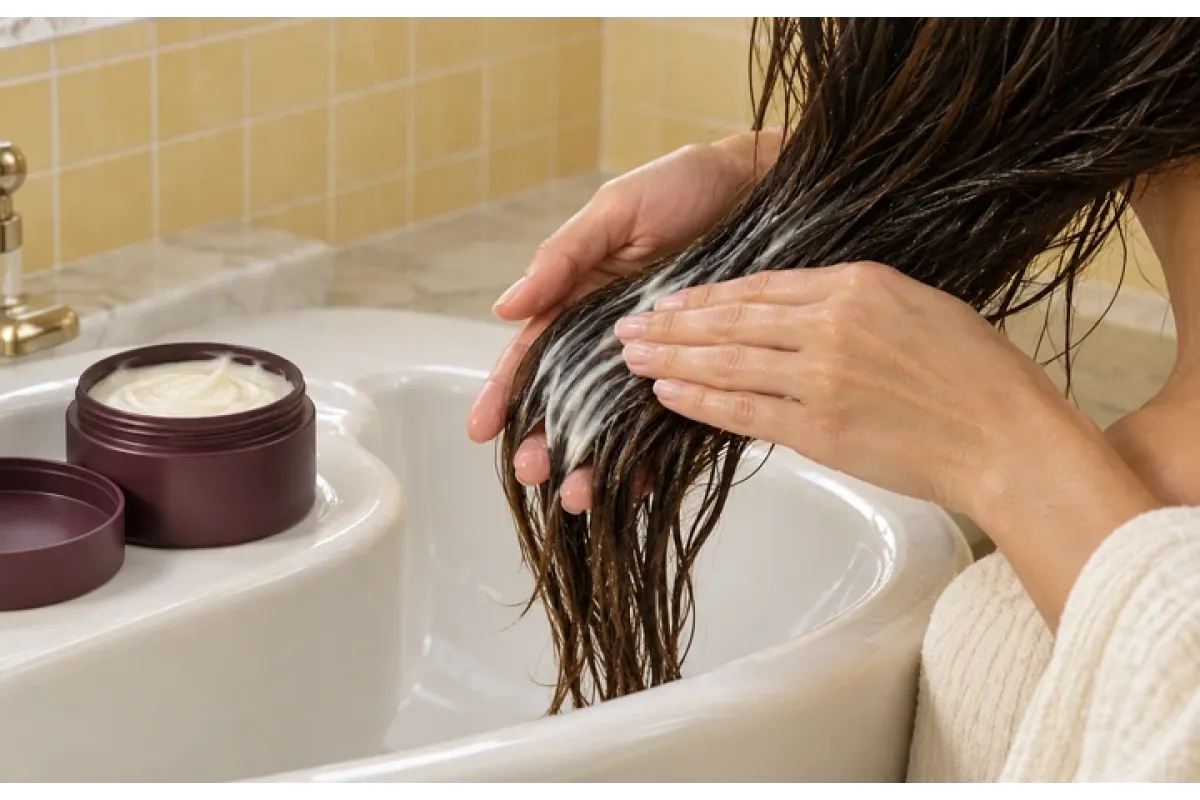
Your hair detangles easily after washing, yet the ends still feel rough. Or a mask feels lovely in the shower, but your usual lightness disappears once the hair is dry. In either case, it is tempting to change your routine. Buying something richer does not always address the problem. First identify what you would like to improve.
Choose between a hair mask and conditioner according to your lengths, practical preferences and the particular product’s directions. Jar size, a thick texture and the word “intensive” cannot tell you which will suit you best. Here is how to create a manageable rinse-out routine and assess it without unnecessary steps.
Start with the job you want rinse-out care to do
Conditioner is commonly chosen as a regular step after shampoo, while a mask may be considered when you want more targeted care. Both categories contain different textures and methods. A mask is not automatically a replacement for every conditioner simply because it looks thicker in the jar.
Describe the aim in a way you can check: easier detangling at the ends, less roughness after drying, or lengths that feel more pleasant to arrange during styling. “Repair everything” is too vague for comparing two products. One observable change in your normal routine makes a much more useful starting point.
Keep the needs of your lengths separate from those of your scalp. Roots that quickly look less fresh do not mean the ends require the same treatment. Apply a length-care product to the scalp only when its manufacturer includes that use in the directions.
Which format to consider
| Your situation | Where to start | What to check |
|---|---|---|
| You want a simple step after washing | A conditioner with a comfortable texture | Detangling and feel once dry |
| Your usual care leaves the lengths wanting more | A mask for a defined purpose | Its intended use and place in the routine |
| Fine hair soon looks weighed down | A less rich formula or more selective application | Amount and areas covered |
| You are following a specific treatment system | The stated sequence | Whether another product follows |
The table offers a direction rather than replacing the label. Someone with fine hair may enjoy a mask, while thick hair may feel comfortable with a suitable conditioner. The result of the actual formula matters more than a rule based solely on strand diameter or the product category’s name.
Do mask and conditioner need to follow each other?
Keune explains that combining them is possible but generally unnecessary. Begin with the instructions rather than an obligatory double application.
Individual treatments can have their own sequence, including a mask followed by another conditioning product. In that case, the additional step belongs to the selected protocol. It should not become a rule for every other mask, or a reason to consider any routine with only one product incorrect.
If the manufacturer does not require a combination and your familiar conditioner works well, you can leave a mask out for now. When trying a new routine, compare it with a normal wash using the same shampoo and drying method. That helps you assess styling afterwards rather than just the slippery feeling under running water.
Four steps for careful application
- Read the method before showering. Check whether the product is for use after shampooing, before washing or in another sequence. Note the processing time and any required next steps. The word “mask” alone does not answer those questions.
- Prepare the hair as directed. If excess water should be removed, squeeze the lengths gently. Do not try to compensate for unsuitable preparation with a much larger scoop. For the first application, follow the stated method without adding your own extras.
- Distribute through the intended areas. Work through the lengths in sections rather than automatically adding product at the roots. The AAD advises gentle detangling of wet hair with a wide-tooth comb. Do not pull through knots.
- Time and rinse as instructed. A timer avoids guessing. After rinsing, continue with another product only if needed or required by the selected treatment. Close the container promptly after use, with its rim kept clean.
Do not add heat, tight wrapping or an overnight session unless the directions include them. A pleasant home ritual does not need extra complexity to feel professional. What matters is that you can repeat the appropriate steps without rushing and use the product in the way it was designed.
Two examples from Wellness Expert
Davines Naturaltech Nourishing Hair Building Pak, 250 ml. The Davines protocol includes a subsequent conditioning step.
Oribe Gold Lust Transformative Masque, 150 ml. Oribe positions it for dry, overworked hair.
These are examples for comparing methods, rather than a pair you need to purchase together. Check current ingredients, warnings and directions on the packaging you receive. Within a treatment system, select accompanying products according to its recommendations. Mixing two masks in your palm to seek “double action” is unnecessary.
How to judge a new routine
Assess the hair after your usual drying method, then again during everyday activities: combing, tying it up or styling it. Do not stop at the sensation immediately after rinsing. Keep other products consistent for the comparison, instead of changing your dryer, styling products and leave-in care at the same time.
- Ease of detangling. Are the ends easier to manage without trying to force a comb through resistance? If not, review even distribution and whether the product matches your aim.
- The feel of the lengths. Do you enjoy the softness and movement after drying? Noticeable shine alone does not establish that a product feels comfortable for you.
- The number of layers. If the result feels heavy, review the amount and optional extras on the next application. Changing the entire shelf at once removes the chance to identify what made the difference.
- Practicality. Does the processing time fit your schedule? A product you use correctly without resenting the procedure is more useful than a purchase you repeatedly save for an evening that never becomes free.
Common questions
Does a mask have to be used once a week?
There is no single calendar. If your washing frequency varies, follow the directions and the result between applications. Do not automatically increase frequency because the lengths feel dry. First review the formula’s suitability and the way you are applying it.
Can I keep a rinse-out mask in as a leave-in cream?
Only if the manufacturer explicitly permits that method. Words such as “nourishing” and “multifunctional” do not replace directions. If you need a product after the shower, choose one clearly intended for leave-in use rather than deliberately leaving mask residue behind.
Does a longer processing time mean a stronger result?
You cannot compare different formulas by the length of their procedures. Choose a product whose instructions suit your available time. When time is short, a suitable brief protocol is more practical than shortening or extending another product’s processing time yourself.
Choosing your next purchase
Before ordering, identify one inconvenience you want to change, then check purpose, timing, sequence and size. If your usual conditioner already suits you, a separate mask is not a compulsory purchase. If an extra treatment is useful, select it so that it fits the way you actually wash your hair.
For different needs at the roots and ends, read our oily roots and dry ends guide. Our article on leave-in haircare helps you choose a separate product for after the shower. Each item can then have a clear, practical place in your routine.
Mila Serani, Skincare & Beauty Editor at Wellness Expert